Cumberland Island Wild Horses: What Visitors Should Know
Cumberland Island Wild Horses: What Visitors Should Know
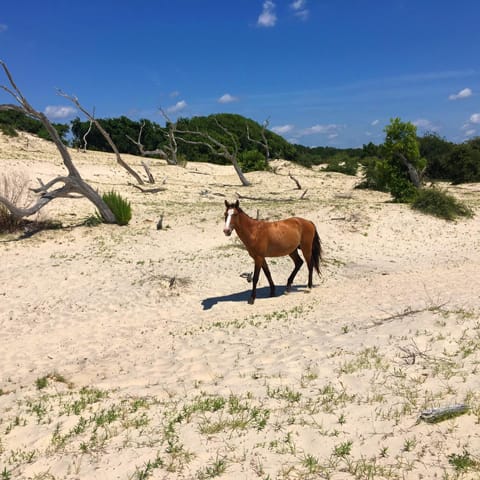
If there is one image that seems to capture the wild side of Cumberland Island, Georgia, it may be a group of horses standing beneath the live oaks or grazing along an open marsh.
The horses are one of the island's most famous attractions, but there is an important distinction visitors need to understand:
These are not tame horses. They are feral animals living on a barrier island and taking care of themselves.
That makes seeing them in their natural environment an incredible experience—but it also means visitors need to give them plenty of space and respect.
Where Did the Cumberland Island Horses Come From?
The horses on Cumberland Island are not native to the island.
Historical accounts indicate that horses were brought to Cumberland by different groups over the years, including people who left horses behind and others who introduced horses to the island. Today's herd descended from those animals.
Unlike horses on some other barrier islands, Cumberland's herd is not managed like livestock.
The National Park Service does not provide the horses with food, water, veterinary care or population-control measures. They survive on the island's natural resources just like the other wildlife.
That is a big part of what makes seeing them so special.
You're not looking at horses in a pasture.
You're seeing animals living essentially wild on one of Georgia's most beautiful coastal islands.
How Many Horses Are on Cumberland Island?
The exact number changes, and counting every horse on a large, heavily forested island isn't possible.
The National Park Service has conducted population surveys for years. Recent NPS information describes the herd as roughly 100–200 horses, while historical survey results have generally been in the low hundreds.
The important thing to remember is that these aren't animals being maintained by the park.
They find their own food and water and deal with the island's natural conditions themselves.
Where Can You See the Wild Horses?
The simple answer is:
Almost anywhere on Cumberland Island.
The horses roam throughout the island and may be found in different habitats, including marshes, open areas, historic lawns, dune meadows and wooded areas.
However, the National Park Service says many day visitors encounter horses around the Dungeness Ruins.
Dungeness is an especially interesting place to see them because you're combining two of Cumberland Island's biggest attractions:
historic ruins + wild horses.
But don't make the mistake of thinking the horses will be standing there waiting for you.
They're wild animals.
There is never a guarantee you'll see them.
What Do Cumberland Island's Horses Eat?
The horses survive on vegetation found throughout the island.
They graze on things such as grasses, sedges, sea oats and cordgrass. They may be seen feeding in marshes, dune meadows, open fields and around historic properties.
They also need fresh water, which occurs naturally in springs and ponds around the island.
This is another reason not to feed them.
They already have a natural food supply, and introducing human food can change their behavior and relationship with people.
How Close Can You Get to a Wild Horse?
This is probably the most important thing to know before visiting Cumberland Island.
Stay at least 50 feet away from horses.
The National Park Service specifically recommends maintaining a distance of at least 50 feet because these are large, powerful animals that can bite, kick or charge if they feel threatened or crowded.
And here's an easy rule to remember:
If the horse changes what it is doing because of you, you're too close.
If a horse stops grazing, changes direction, moves away or otherwise reacts to your presence, back away.
Don't try to get the perfect photograph.
Give the horse its space.
Never Feed or Pet the Horses
We know.
You're standing there looking at a beautiful horse and it may seem completely calm.
Maybe it's even standing relatively close to you.
Don't feed it. Don't pet it. Don't try to touch it.
The National Park Service specifically prohibits visitors from feeding or petting the horses.
Feeding wildlife can cause animals to associate humans with food. That can eventually create aggressive or dangerous behavior and can be harmful to the animals themselves.
What seems like a harmless snack from one visitor can create a much bigger problem over time.
What If a Horse Walks Toward You?
This is another situation people don't always think about.
What if you aren't approaching the horse—but the horse approaches you?
Move away.
The National Park Service advises visitors to get out of the horse's path and, if possible, place something substantial such as a tree, picnic table or other large object between themselves and the horse.
Remember:
The horse has the right-of-way.
You're visiting its home.
Don't Try to Get the Perfect Selfie
This deserves its own section.
We've all seen the pictures.
Someone standing just a few feet away from a wild animal because they wanted that perfect social-media shot.
Don't do it.
A Cumberland Island horse can look completely relaxed one second and react very differently the next.
Visitors have been injured by horses on the island, including injuries from kicks, bites and being knocked down.
You can get an incredible photograph without standing next to the animal.
Use your camera's zoom.
Give the horse room.
The photograph will actually be better because you're capturing the horse behaving naturally.
Keep Children Away From the Horses
Cumberland Island is a fantastic family destination, but children may not understand how powerful a horse can be.
Make sure kids know the rules before you encounter one:
Don't run toward it.
Don't try to pet it.
Don't feed it.
Don't scream or chase it.
Don't get between horses.
Stay at least 50 feet away.
Let the horse move freely.
The safest encounter is one where the horse barely notices you're there.
What About Horses on Roads and Trails?
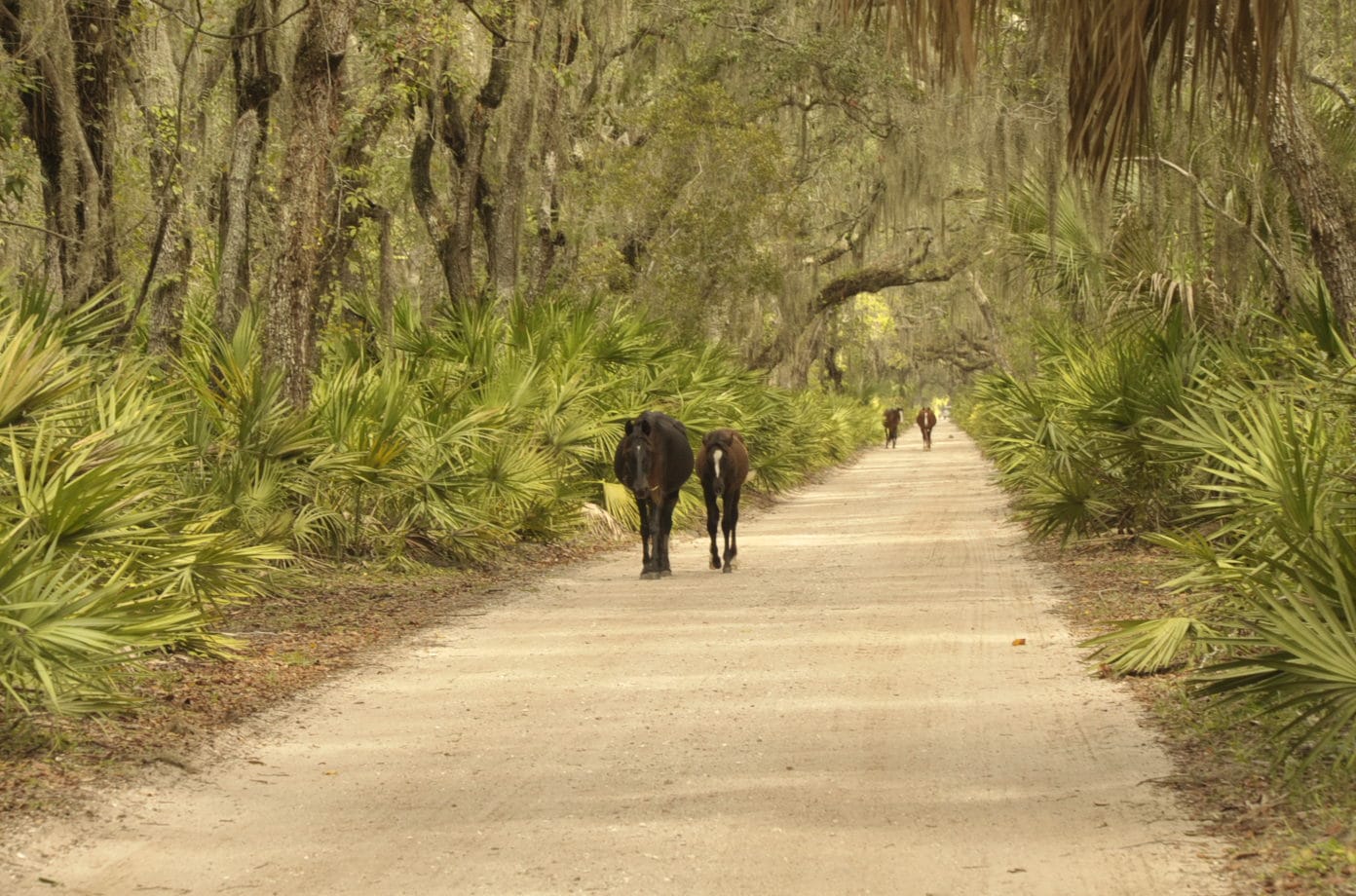
Don't be surprised if a horse appears on a trail or road.
Horses use the island's roads and trails as part of their normal movement around the island.
If you're walking or riding and encounter a horse coming toward you, step aside and let it pass.
Don't try to force your way around it.
Don't chase it.
And definitely don't try to make it move for a photograph.
Just wait.
You're on island time anyway.
The Horses Are Only Part of Cumberland Island's Wildlife
One of the coolest things about Cumberland Island is that the horses aren't the only wildlife you're likely to encounter.
The island supports a wide variety of coastal wildlife, including birds, deer and other animals.
The NPS even notes that Cumberland Island has a small population of piebald deer, which can appear mostly white with patches of brown.
So keep your eyes open.
You never really know what you're going to see around the next bend in the trail.
The Wild Horses Are Part of the Experience
There is something pretty amazing about walking through a coastal forest and suddenly seeing a horse standing beneath an enormous live oak.
There's no fence.
No stable.
No handler.
No saddle.
Just a horse living on Cumberland Island.
That's what makes the experience different.
But it also means visitors have a responsibility.
The best way to enjoy Cumberland Island's horses is to observe them without interfering with them.
Let them graze.
Let them walk.
Let them rest.
Let them be horses.
Tips for Photographing Cumberland Island's Horses
If you're hoping to come home with some great pictures, you don't need to get close.
Try these tips:
Use your zoom.
A modern phone can capture surprisingly good wildlife photographs from a safe distance.
Look for good light.
Early morning and late afternoon can create beautiful coastal light.
Don't chase the horse.
If it walks away, let it go.
Include the surroundings.
A horse underneath live oaks, beside marsh grass or near the historic ruins tells a much better Cumberland Island story than a close-up portrait.
Be patient.
Sometimes the best wildlife photograph is the one you weren't expecting.
When Is the Best Time to See the Horses?
There isn't a guaranteed time or location.
That's part of the adventure.
The horses move around the island according to their own needs, so visitors shouldn't plan a trip around a promise that they'll see them in a particular place.
The National Park Service specifically warns that wildlife sightings are never guaranteed.
Instead, explore the island and keep your eyes open.
You may find horses near Dungeness.
You may see them along a trail.
You may spot them grazing in an open area.
Or you may have to wait for another visit.
That's wildlife.
Planning a Cumberland Island Trip From St. Marys
For most visitors, the journey to Cumberland Island begins in St. Marys, Georgia.
You'll take the passenger ferry from the mainland and spend the day—or longer—exploring the island.
Before you go, make sure you understand the ferry schedule, reservations, what you're allowed to bring and how you're getting back to the mainland.
And bring the basics:
Plenty of water
Food and snacks
Sunscreen
Bug spray
Comfortable walking shoes
Sunglasses
Camera
Phone battery/power bank
Small backpack
Cumberland Island has no stores or restaurants waiting for you once you're exploring the island, so planning ahead makes a big difference.
Respect the Island
The wild horses are one of the reasons people fall in love with Cumberland Island.
But they're also a reminder that this isn't a traditional tourist attraction.
You're visiting a protected coastal environment.
The National Park Service's current safety guidance says to let wildlife remain wild, avoid touching or feeding animals, and maintain a safe distance.
So take the pictures.
Enjoy the scenery.
Watch the horses.
But leave them exactly as you found them.
Final Thoughts
Cumberland Island's wild horses are something you don't forget.
Maybe you'll see one grazing near the Dungeness ruins.
Maybe you'll encounter a group along a trail.
Maybe you'll catch a horse standing beneath a massive live oak with the Georgia coast stretching out behind it.
Whatever the encounter looks like, remember that you are a visitor in their home.
Give them space.
Don't feed them.
Don't touch them.
Don't chase them.
And let them continue living the wild life that makes Cumberland Island so special.
That's what makes the experience worth the trip.
Your Cumberland Island adventure starts in St. Marys—and sometimes the best memories are the ones you never planned on seeing.
More Cumberland Island From 912 Coastal
Explore More 912 Coastal
Fishing Tips — Practical techniques and ideas to help you become a better angler.
Fishing Reports — See what's happening on the water and what's changing with the seasons.
Gear Reviews — Learn about the equipment that helps you put your fishing plan into practice.
St. Marys Fishing — Explore one of our home waters and the fishing opportunities around the area.
Kayaking — Discover another way to get into shallow coastal water.
Boating — Explore the boating side of coastal fishing and getting on the water.
Fishing Charters & Trips — Sometimes the best way to learn new water is to spend a day with someone who knows it.
Coastal Living — Because there's more to life on the coast than fishing.
Wildlife conditions, park rules, ferry schedules and other visitor information can change. Check current National Park Service information before your trip.
DRIFTWOOD HATS
Top off your coastal style.
Classic 912 Coastal style built for fishing days, boat rides, beach walks and everything in between.
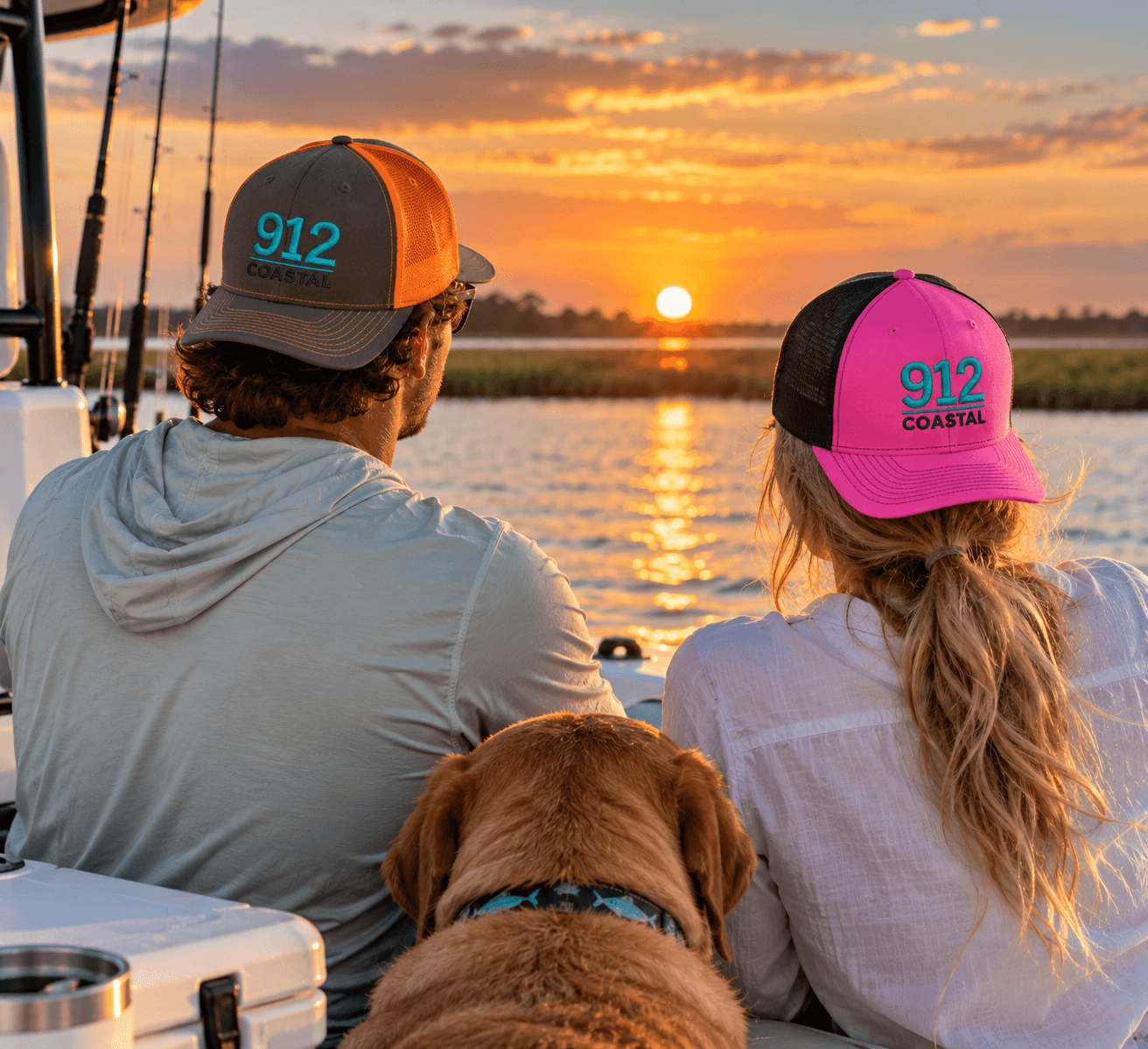
Introducing the Free Buoy Collection
Not Everyone Blends In... And Neither Should Your Hat.
The Free Buoy Hats bring bold colors and unmistakable coastal personality to your next fishing trip, beach day, or boat ride. Comfortable and easy to wear, they're made for anyone who doesn't mind standing out.

912 Coastal Coastal Classics™
Built for Long Days on the Water.
The Coastal Classics™ Performance Fishing Shirt combines lightweight comfort and performance features to keep you cool and comfortable while fishing, boating, or enjoying the dock. It's made for long days on the water and everyday life along the coast.
ABOUT 912 COASTAL
912 Coastal is your home for fishing, boating, and coastal living across Georgia and Northeast Florida. Discover local fishing reports, gear reviews, guides, and coastal adventures.
Tight lines, and welcome to the 912 Coastal community!


Join thousands of anglers and get fishing tips, local reports, new blog posts, gear recommendations, and exclusive 912 Coastal updates delivered to your inbox.