Boat Ramps 101: Everything You Need to Know About Launching a Boat
Boat Ramps 101: Everything You Need to Know About Launching a Boat
Launching a boat should be the beginning of a good day on the water, not the most stressful part of the trip.
Whether you're launching a skiff, bay boat, center console, or another trailered boat, knowing how to use a boat ramp makes the whole process faster, safer, and easier. Choosing the right ramp matters just as much. Along the Georgia and Northeast Florida coast, ramps can be very different from each other, and depth, tide, current, parking, crowds, and the water on the other side all change how a launch goes.
What Is a Boat Ramp?
A boat ramp is a designated area that lets a trailered boat move from land into the water. Most public ramps include a sloped launch surface, parking for vehicles and trailers, and access to a nearby waterway.
Ramps vary a lot. Some are large public facilities with multiple launch lanes, docks, restrooms, lighting, and plenty of parking. Others are small, with one lane and limited parking.
The ramp matters, but so does the water on the other side of it. A ramp that works well for a shallow-water skiff may not have enough depth for a larger boat.
Public and Private Boat Ramps
Not every ramp you see is open to the public.
Public ramps are usually operated by a city, county, state agency, park, or other public organization. Some are free, and others charge a launch fee or parking fee or require a permit or registration.
Private ramps may belong to marinas, businesses, neighborhoods, campgrounds, or other properties. Some allow public use for a fee, and others are limited to customers, residents, or members.
A ramp that's visible from a public road isn't necessarily open to everyone. Always check the posted rules before launching.
How to Choose the Right Boat Ramp
Finding a ramp is easy. Finding the right one for your boat and your trip takes more thought.
Start with the water you want to reach. For inshore fishing, look for a ramp near tidal creeks, flats, rivers, or sounds. For a longer trip, parking, fuel, dock space, and distance to open water may matter more.
Look at the ramp itself.Check the number of lanes, the condition of the concrete, the water depth at the end, and whether there's a courtesy dock.
Look at parking. A single-lane ramp with limited trailer parking can fill up quickly on weekends and holidays. Arrive early when you expect a crowd.
Check the rules and current conditions. Hours, fees, closures, and construction can change. Recent information beats an old map or an outdated article.
Think about the whole day. The best ramp is the one that gets you to your fishing spot with the least travel and the fewest headaches, including on the return trip when the tide has changed.
What to Look For at Any Boat Ramp
Before you launch at an unfamiliar ramp, check the things that most affect your day:
Location and access: Where the ramp is and how to reach it with a trailer
Number of lanes: One lane backs up quickly on busy days
Courtesy docks: Whether there are any and what condition they're in
Parking: How much trailer parking there is and how fast it fills up
Fees and rules: Launch fees, permits, and hours
Tide sensitivity: How the ramp behaves at low, mid, and high tide
Best for: Skiffs, bay boats, larger boats, or kayaks
Nearby water: What you can reach and how quickly
Amenities: Restrooms, lighting, fuel, and other services
Before You Leave Home
Most launch problems start before you reach the ramp.
Check the tide. A ramp with plenty of water at high tide can be shallow, muddy, or hard to use at low tide. Tides 101 explains how to read a tide chart.
Check the weather and wind. Wind and current can make launching and loading harder, especially at ramps with a cross-current.
Check the ramp. Look for current photos, recent fishing reports, and official information about closures, fees, and hours.
Look at the route. Some ramps have narrow roads, tight turns, or steep approaches.
Check your boat and trailer. Tires, lights, straps, winch, safety chains, and drain plug. It's much easier to fix a problem at home than at the ramp.
Boat Launch Checklist
Use this as a starting point and adjust it for your boat and trailer. Your boat and trailer manuals may have specific steps for your setup.
In the staging area (before you enter the launch lane):
Remove the boat cover and stow it.
Install the drain plug.
Load gear, coolers, rods, and safety equipment.
Check batteries, the kill switch, and electronics.
Attach a bow line and dock lines so you can control the boat in the water.
Remove transom tie-downs and other tie-downs. Leave the winch strap and safety chain attached until you're ready to release the boat.
Make sure everyone knows their job: who drives the tow vehicle and who handles the boat.
Follow your trailer's guidance on lights before backing into the water.
At the ramp:
Back down slowly and keep the trailer as straight as possible.
Stop where the boat will float off, set the parking brake, and put the vehicle in park.
Release the winch strap and safety chain and confirm the bow line is secure.
Let the boat float off, or back it off, following your normal procedure.
Move the boat to the courtesy dock or a waiting area right away. Don't leave it in the launch lane.
Pull the vehicle and trailer out and park in the designated area.
If you're not comfortable backing a trailer, practice in an empty parking lot before your first busy ramp. Learning how the trailer responds to steering makes launching much easier.
Boat Retrieval Checklist
Make a plan before you get in line. Know who is driving the tow vehicle and who is handling the boat.
Wait at the dock or in a waiting area, not in the launch lane.
Back the trailer down and line the boat up carefully.
Guide the boat onto the trailer and secure the winch strap.
Pull forward out of the lane and move to the staging area.
Reattach the safety chain, tie-downs, and transom straps. Remove the drain plug and stow gear.
Do a walk-around: lights, straps, plug, gear, and anything left on the ramp or dock.
Do your cleanup and packing in the staging area, not on the ramp.
Boat Ramp Etiquette
Boat ramps are shared spaces, and a little courtesy goes a long way. The basic rule is simple: prepare before you get to the ramp, launch efficiently, and move away from the launch lane when you're done.
Get the boat ready in the staging area, not in the launch lane.
Don't spend time in the launch lane organizing gear, coolers, or passengers.
Use the courtesy dock briefly, then move along.
Give other boaters room and don't cut in line.
When you return, wait your turn and use designated areas for loading and cleanup.
Be patient on busy days. Everyone is trying to get on the water.
Tides and Boat Ramps
Tide matters at coastal ramps.
At a ramp with a gradual slope, the difference between high and low tide may not seem like much. At a shallow ramp, it can decide whether the boat floats off easily or sits on the concrete.
Low tide can expose mud or shallow areas at the end of the ramp and make launching harder for larger boats.
Strong current can push a boat sideways off the trailer or make loading harder.
A changing tide means the ramp may look very different when you return than when you left.
Check the tide for both launch and return, not just for when you leave. Two ramps a few miles apart can behave very differently, which is why local knowledge is so valuable and why our ramp guides note how each one handles tide. For more, see Tides 101.
Boat Ramp Safety
Boat ramps combine vehicles, trailers, boats, wet surfaces, moving water, and often crowds. Take your time.
Walk the ramp first if it's unfamiliar. Look for uneven pavement, algae, damaged concrete, drop-offs, and floating debris.
Watch your footing. Wet ramps can be very slippery, especially with algae.
Keep passengers and children clear of moving vehicles, trailers, and lines.
Make sure everyone knows their job before you back down.
Be careful with current. At tidal ramps, conditions can change during your trip.
Wear a life jacket when you're working on docks or handling the boat in the water.
Choosing a Ramp for Different Boats
Skiffs and small boats can often use shallow or narrow ramps, but check depth and mud at low tide.
Bay boats and center consoles usually need more depth and room to maneuver.
Larger boats need deeper water, more turning room, and more parking.
Kayak trailers and smaller craft have different needs. A ramp may work for launching but offer limited access once you're on the water. See the beginner's guide to kayaking.
Think about your boat's draft, trailer length, turning radius, and the water you want to reach. For general boating basics, see the beginner's guide to boating.
Boat Ramps and Fishing
The ramp you choose affects your whole fishing trip.
A ramp close to productive water means less travel time and more time fishing. A ramp farther up a river may put you in different habitat than one near the mouth of an estuary.
For inshore fishing, decide where you want to fish first: creeks, oyster bars, grass flats, docks, or marsh edges. Then choose the ramp that gets you there at the right tide. Inshore Fishing 101 covers how to think about where fish will be.
What to Bring to the Boat Ramp
Trailer keys and hitch equipment
Drain plug (and a spare)
Bow and stern dock lines
Winch strap and tie-downs
Life jackets and required safety gear
Wheel chocks
Gloves
A few basic tools and spare parts (extra strap, bulbs, fuses)
Sun protection, water, and a way to protect your phone
Keeping a simple launch checklist in your vehicle helps, especially if you use different ramps.
Frequently Asked Questions About Boat Ramps
Do you need a permit to use a boat ramp?
It depends on the ramp. Some are free, and others require a launch fee, parking fee, or permit. Always check the rules for the specific ramp.
What time should I arrive at a busy boat ramp?
Earlier is usually easier, especially on weekends, holidays, and during popular fishing seasons.
Should I prepare my boat before getting on the ramp?
Yes. Use the staging area so the launch lane stays open for others.
How important is the tide at a coastal boat ramp?
It can matter a lot. Water depth at the end of a ramp can change significantly with the tide, especially at shallow ramps.
What should I do after launching?
Move the boat to a courtesy dock or waiting area so others can use the launch lane.
What if I'm not comfortable backing a trailer?
Practice in an empty parking lot first. It's the fastest way to build confidence before a busy ramp.
What's the most important boat ramp rule?
Be prepared, pay attention to your surroundings, and don't block the launch lane.
Related Guides
Final Thoughts
A good day on the water starts before the boat leaves the trailer.
Know where you're going, check the tide and weather, prepare in the staging area, follow ramp etiquette, and match the ramp to your boat and your plans.
Once you understand the basics, ramps become predictable, and you can spend less time worrying about the launch and more time on the water.

The Heritage Collection
Built for the Coast. Ready for Every Adventure.
From cool mornings on the water to evenings around the grill, the Heritage Long Sleeve is made for life along the coast. Lightweight, breathable, and built with UPF 44+ protection, it's the layer you'll reach for whether you're fishing, boating, or simply enjoying the sunset.
COASTAL CLASSICS
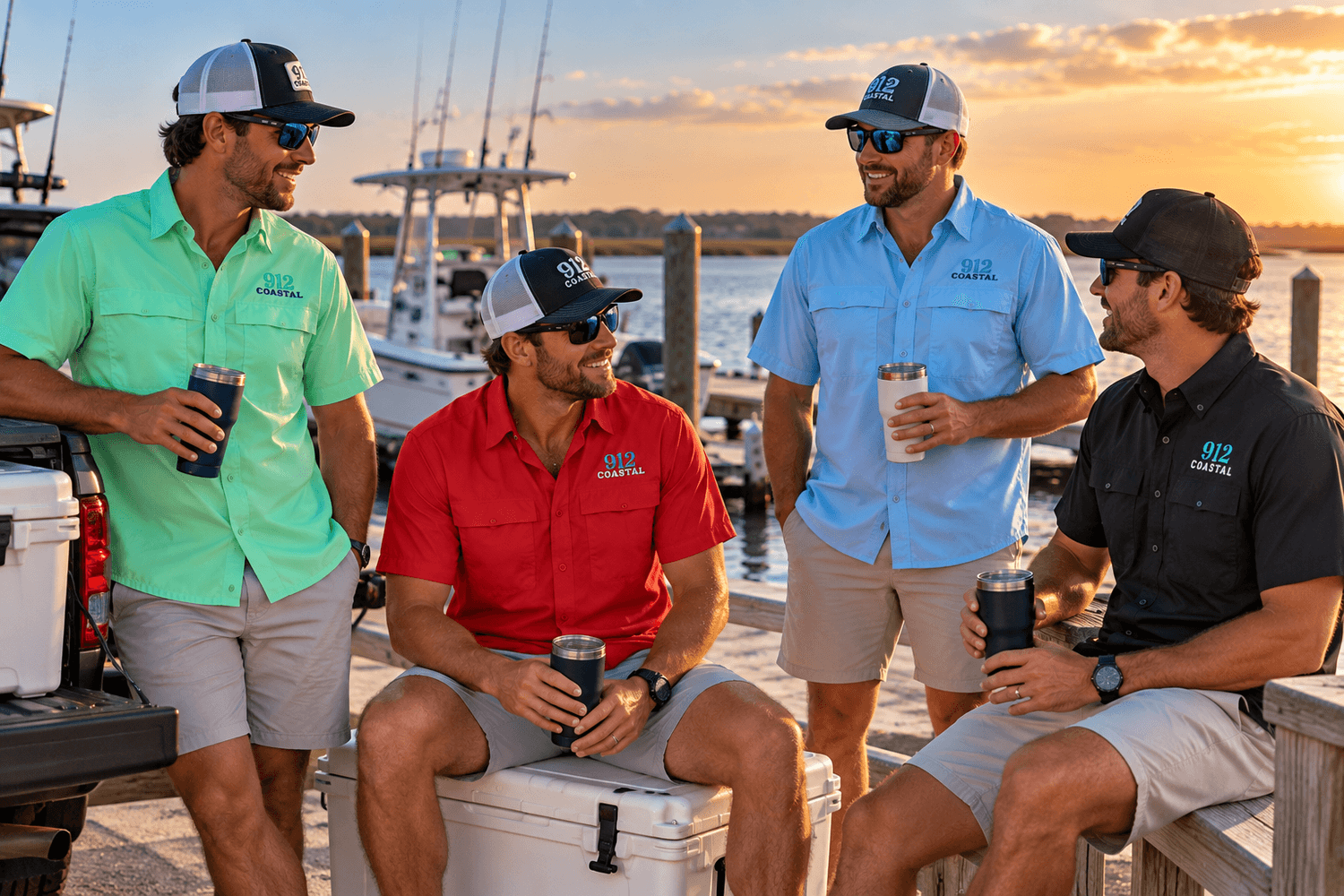
Built for days on the coast.
From mornings on the water to evenings by the dock, Coastal Classics are made for the everyday coastal lifestyle.
ABOUT 912 COASTAL
912 Coastal is your home for fishing, boating, and coastal living across Georgia and Northeast Florida. Discover local fishing reports, gear reviews, guides, and coastal adventures.
Tight lines, and welcome to the 912 Coastal community!


Join thousands of anglers and get fishing tips, local reports, new blog posts, gear recommendations, and exclusive 912 Coastal updates delivered to your inbox.