Best Places to Fish in St. Marys, Georgia
Best Places to Fish in St. Marys, Georgia
If you're looking for the best places to fish in St. Marys, Georgia, you don't have to travel far to find productive inshore water.
St. Marys sits along Georgia's southern coast, surrounded by tidal rivers, salt marshes, creeks, oyster areas and coastal habitat. That gives anglers plenty of ways to fish—from the shoreline and public access areas to kayaks and boats.
From Crooked River and its surrounding marshes to the St. Marys River and nearby coastal waters, the area offers opportunities to target redfish, spotted seatrout, black drum, sheepshead, whiting, flounder and other inshore species.
But finding fish isn't always about finding a secret fishing spot.
It's about learning how to read the water.
Look for moving water, structure, bait, depth changes and places where smaller creeks drain into larger bodies of water. Once you start recognizing those patterns, you'll have a much better idea of where to make your next cast.
New to inshore fishing? Start with our Inshore Fishing 101 guide before heading out. It covers the fundamentals of understanding inshore water, conditions and fish behavior.
1. Crooked River State Park
One of the first places anglers should know about is Crooked River State Park.
Located in St. Marys along the tidal Crooked River, the park provides opportunities for both shore anglers and boaters. Georgia State Parks identifies Crooked River as one of Georgia's state parks offering saltwater fishing.
Possible catches include:
Redfish
Seatrout
Black drum
Sheepshead
Flounder
Whiting
Other coastal inshore species
The park has a boat ramp and dock, making it useful for anglers who want to launch and explore the surrounding marshes.
Planning to explore Crooked River by kayak? Check out our guide to kayaking in Crooked River for more information about paddling the area and what to consider before launching.
For shore anglers, fishing opportunities are available around areas such as the boat ramp and courtesy dock when it isn't being used by boaters.
2. The Crooked River Marshes
You don't always need to find a famous fishing hole.
Sometimes the best strategy is learning how to read the marsh.
Look for:
Creek mouths
Oyster areas
Grass edges
Mud flats
Deeper channels
Points where smaller creeks meet larger water
Places where moving water concentrates bait
Georgia State Parks notes that shell bars, beaches, mud and grass areas around Crooked River can attract redfish, trout and drum.
This is where understanding the tide becomes extremely important.
For new inshore anglers, this is one of the most important concepts to understand. Fish don't necessarily hold randomly throughout a marsh. They often use current, structure and changes in depth to position themselves where food is moving past them.
That's why a creek mouth, marsh drain or oyster edge can be much more productive than simply casting along a featureless shoreline.
As water moves through the marsh, bait and food move with it. Predators often position themselves where they can take advantage of that current.
3. River Trail at Crooked River State Park
For anglers without a boat, the River Trail is another area worth knowing.
Georgia State Parks describes the trail as a short route leading toward the marsh and river and specifically identifies it as a fishing location.
Shore anglers may encounter species including sheepshead, whiting, trout and black drum, along with rays and small sharks.
This is a good example of why you shouldn't assume you need a boat to experience St. Marys fishing.
There are opportunities to get close to productive coastal water on foot.
4. Boat Access Around St. Marys
If you have a boat, St. Marys becomes a much larger fishing playground.
The area's rivers and marshes provide access to numerous creeks and shallow-water areas.
Crooked River State Park has a boat ramp and dock, and Georgia State Parks notes that the ramp is popular with anglers who often launch before sunrise.
Once you're on the water, don't simply run to the middle of the river and start casting.
Instead, look for structure and water movement.
A creek draining a shallow marsh flat can be much more interesting than a large stretch of featureless water.
5. Kayak Fishing Around St. Marys
St. Marys is also a great area to explore by kayak.
A kayak allows anglers to reach smaller creeks and shallow marsh areas that larger boats may not be able to access.
It also gives you a different perspective on the water.
You can quietly move along:
Marsh edges
Small creeks
Shallow flats
Oyster areas
Tidal cuts
But always pay attention to the tide and weather.
A route that looks easy going one direction can become considerably different when the tide changes.
Crooked River State Park specifically supports boating and paddling access to the surrounding marshes.
6. St. Marys Jetties & Fort Clinch
For anglers looking to explore beyond the rivers and marshes, the St. Marys jetties and nearby Fort Clinch area offer another type of coastal fishing opportunity. These areas provide access to moving water, structure and deeper channels where conditions can create opportunities for a variety of species.
Interested in fishing the jetties? Check out our guides to St. Marys Jetties Fishing and Fort Clinch Jetties for more information about these popular fishing areas, including current, structure, baits and fishing considerations.
What Should You Look For When Fishing St. Marys?
Finding a productive fishing location isn't necessarily about finding a secret spot.
It's about finding fish habitat.
When you're exploring St. Marys, look for places where several factors come together.
Moving Water
Moving water can concentrate bait and create feeding opportunities.
Structure
Oyster bars, docks, fallen trees and other structure can provide places for fish to feed or hide.
Bait
If you see bait activity, birds working or other signs of life, pay attention.
Depth Changes
A shallow flat next to a deeper channel can be particularly interesting as the tide changes.
Marsh Drains
Small creeks draining into larger bodies of water can be worth checking, especially when water is moving.
What Can You Catch?
The species you encounter will depend on the season, location, tide and conditions.
Some of the popular inshore targets around St. Marys include:
Redfish: Often targeted around marsh edges, oyster areas and shallow water.
Seatrout: Commonly associated with moving water and areas holding bait.
Black Drum: Can be found around deeper water and structure.
Sheepshead: Look around hard structure, docks and oyster areas.
Whiting: A popular target for anglers fishing from shore and other shallow-water areas.
Flounder: Another species anglers may encounter along the Georgia coast.
Crooked River State Park specifically lists these species among the potential catches in the area.
When Should You Fish St. Marys?
One of the biggest mistakes new inshore anglers make is focusing only on the clock.
Instead, pay attention to the tide.
The same fishing location can look completely different as water moves into and out of the marsh. Creek mouths, oyster edges, shallow flats and marsh drains can become much more interesting when current begins moving bait through the area.
Before heading out, check:
Tide times
Weather
Wind
Water conditions
Water temperature
Recent fishing reports
Then think about how those conditions affect the area you want to fish.
Don't just ask, "Where should I fish?"
Ask:
"Where will the water—and the bait—be moving?"
That small change in thinking can make a big difference for an inshore angler.
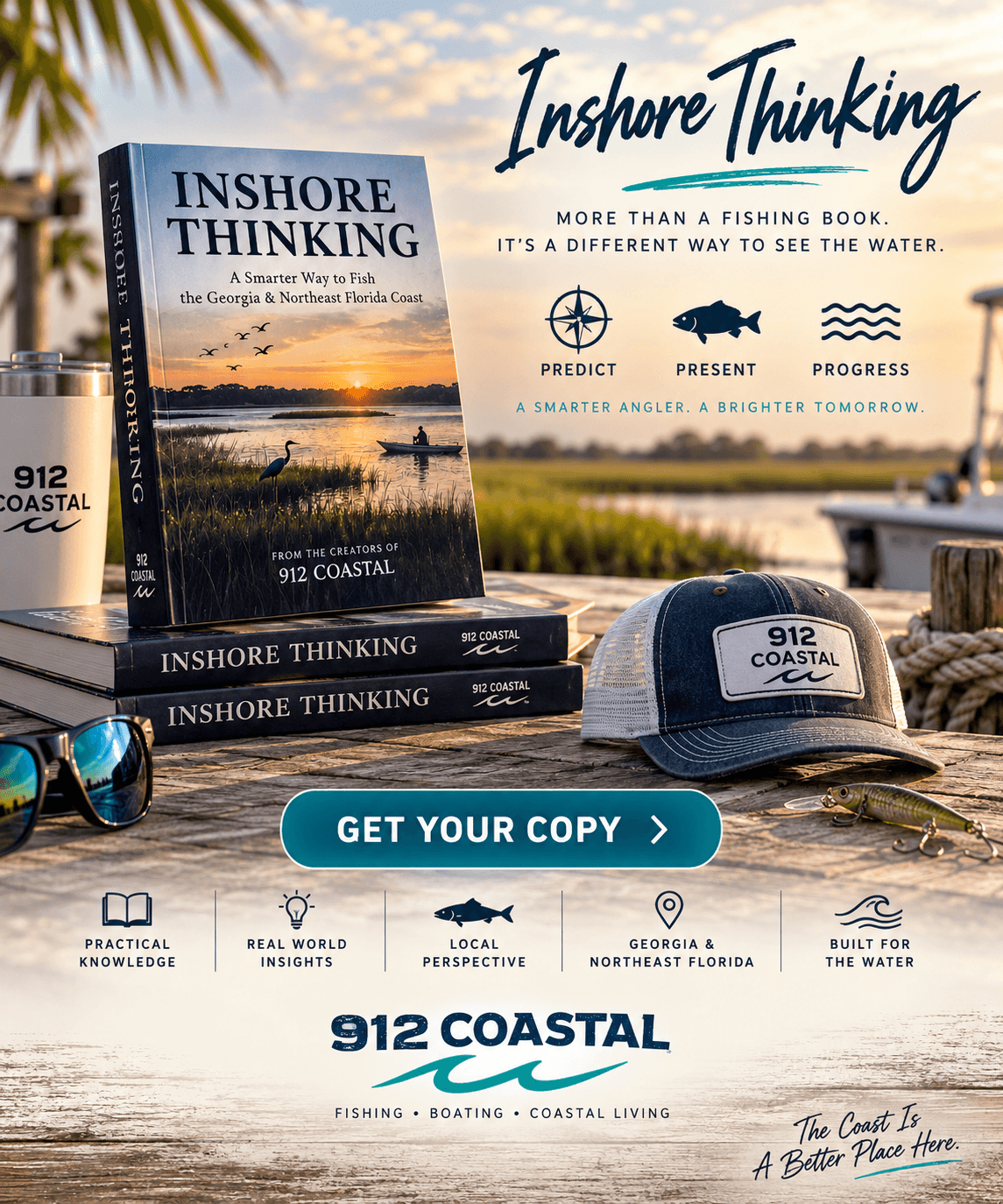
INSHORE THINKING
The Complete Guide to Fishing Smarter
You've learned where to look.
Now learn why fish are there.
Inshore Thinking takes the ideas behind successful inshore fishing and brings them together in one complete guide—from understanding water and structure to recognizing conditions and making smarter decisions on the water.
If you want to go beyond simply finding a fishing spot and start understanding the water you're fishing, this book was made for you.
Fishing From Shore vs. Boat vs. Kayak
You don't need a boat to enjoy St. Marys fishing.
One of the things that makes this area appealing to inshore anglers is the variety of ways you can access the water.
Shore Fishing
Shore fishing is inexpensive and a great way for beginners to learn the area.
Look for:
Moving water
Structure
Deeper edges
Marsh access
Current breaks
Creek mouths
Oyster areas
You may not cover as much water from shore, but learning to recognize productive water can teach you skills that transfer directly to kayak and boat fishing.
Boat Fishing
A boat gives you access to a much larger area and allows you to move between creeks, flats, channels and deeper water.
The biggest mistake is assuming that more water automatically means more fish.
Instead, use your ability to move around to find better water.
Look for combinations of current, structure, bait and depth changes.
Kayak Fishing
A kayak falls somewhere in between.
You can reach shallow water and smaller creeks that larger boats may not be able to access while still covering considerably more ground than you can on foot.
Kayak anglers should pay especially close attention to the tide. A route that is easy to paddle on one stage of the tide can become much more difficult after the water begins moving in another direction.
The goal isn't simply to go farther. It's to find productive water that you can safely access.
Fishing From Shore vs. Boat
How to Find Your Own St. Marys Fishing Spots
The best fishing spot isn't always the one someone gives you on a map.
Learning to find fish on your own is one of the most valuable skills you can develop as an inshore angler.
When exploring St. Marys, look for combinations of:
Moving water + structure + bait + depth
For example:
Creek mouth + outgoing current + bait = worth investigating
Oyster edge + moving water + deeper water nearby = worth investigating
Marsh drain + falling tide + bait activity = worth investigating
Shallow flat + deeper channel nearby + feeding activity = worth investigating
You don't need every factor to be present every time. But the more pieces of the puzzle you can put together, the more educated your decision becomes.
That's the difference between simply fishing a spot and learning how to find fish.
A Few Tips for Your Next St. Marys Fishing Trip
Before you leave home:
Check the tide.
Check the weather.
Bring the right tackle.
Carry plenty of water.
Wear appropriate safety equipment.
Know the current Georgia fishing regulations.
And don't overlook the simplest piece of fishing equipment you have:
Your eyes.
Watch the water.
Look for bait.
Watch birds.
Look for current.
Pay attention to where other anglers are catching fish.
The more you learn to recognize what the water is telling you, the better you'll become at finding fish.
Final Thoughts
The best fishing spots in St. Marys, Georgia aren't necessarily one secret location.
They're the places where tide, structure, bait and water movement come together.
Crooked River State Park is an excellent place to begin, especially because it provides both shore and boat access and sits right in the middle of the coastal habitat that makes this area special.
From there, explore.
Try different tides.
Fish different structure.
Learn the marsh.
And eventually you'll start developing your own list of favorite St. Marys fishing spots.
That's what 912 Coastal is all about—helping anglers discover the fishing, boating, kayaking and
coastal lifestyle of St. Marys and the surrounding Georgia and Northeast Florida coast.
Want to take your inshore fishing knowledge a step further?
Start with Inshore Fishing 101, then go deeper with Inshore Thinking — The Complete Book to Fishing Smarter.
ABOUT 912 COASTAL
912 Coastal is your home for fishing, boating, and coastal living across Georgia and Northeast Florida. Discover local fishing reports, gear reviews, guides, and coastal adventures.
Tight lines, and welcome to the 912 Coastal community!


Join thousands of anglers and get fishing tips, local reports, new blog posts, gear recommendations, and exclusive 912 Coastal updates delivered to your inbox.